

Soft Fork vs Hard Fork: What Is the Difference?
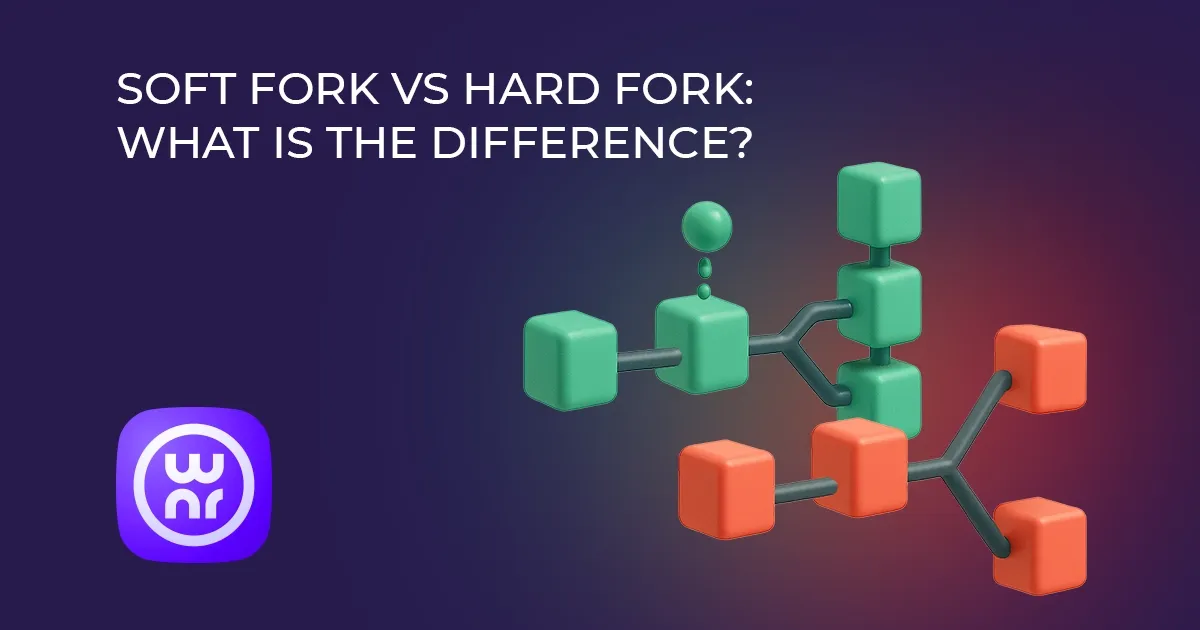
Forks are essential events in blockchain networks that introduce changes to the protocol. They can be categorized into two main types: soft forks and hard forks. While both modify the blockchain's rules, they differ in compatibility, implementation, and impact on the network.
What Is a Fork in Blockchain?
A fork occurs when a blockchain splits into two separate paths due to changes in its protocol. Forks can be planned (for upgrades) or contentious (due to disagreements in the community). They are necessary for implementing new features, fixing security issues, or reversing transactions (e.g., after a hack).
Soft Fork: Backward-Compatible Upgrade
A soft fork is a backward-compatible update, meaning nodes that don’t upgrade can still validate transactions under the new rules.
How a Soft Fork Works
- Tightens or adds new rules without invalidating old ones.
- Non-upgraded nodes still recognize new blocks as valid.
- Requires majority miner support (usually over 51%) to enforce new rules.
Examples of Soft Forks
Bitcoin’s SegWit (2017): Improved transaction capacity by separating signature data. Bitcoin’s P2SH (2012): Enabled multi-signature transactions.
Pros & Cons of Soft Forks
- Less disruptive – Older nodes remain compatible.
- No chain split – Only one blockchain continues.
- Requires majority consensus – Miners must adopt changes.
- Limited scope – Only certain rule changes are possible.
Hard Fork: A Non-Compatible Split
A hard fork is a radical upgrade that makes previous blocks invalid under new rules, requiring all nodes to update.
How a Hard Fork Works
- Introduces non-backward-compatible changes.
- Nodes that don’t upgrade reject new blocks, leading to a permanent split.
- Can be planned (e.g., Ethereum’s Berlin upgrade) or contentious (e.g., Bitcoin Cash split).
Examples of Hard Forks
Ethereum → Ethereum Classic (2016): Split after the DAO hack reversal. Bitcoin → Bitcoin Cash (2017): Increased block size for scalability.
Pros & Cons of Hard Forks
- Allows major upgrades – Enables significant protocol changes.
- No miner majority needed – Can proceed with minority support.
- Risk of chain split – Can divide the community and create two blockchains.
- Requires full node upgrades – Non-upgraded nodes become incompatible.
Conclusion
Soft forks and hard forks serve different purposes in blockchain development. Soft forks allow smoother, backward-compatible upgrades, while hard forks enable drastic changes but risk splitting the network. Understanding these differences helps users and developers navigate blockchain evolution effectively.
Share this article
We use cookies to improve your experience. By closing this message you agree to our Cookies Policy.